Nurturing Resilience
Throughout this site there are links to documents of various file types. Please contact our Statewide Program Leader if you require this information in a different format.
Cultivating skills for sustainable food
Engaging university-trained volunteers to empower and sustain diverse communities with relevant, unbiased, research-based horticulture and environmental stewardship education. Read about Extension Master Gardeners in the news around Washington state.

Public Value
The Extension Master Gardener Program in Washington State directly impacted food growing and security practices among 17,769 individuals. This led to increased engagement of community members in growing food and donating produce to local food banks and pantries. The program donated 167,229 pounds of produce, valued at $361,215. This made nutrient-dense foods easily accessible locally, feeding 429 households for a year.
Issue
Between 2020 and 2024, food insecurity was a significant challenge in Washington, affecting an estimated 27% to 49% of households, or up to 1.5 million residents. Recent data from 2024 indicates that food insecurity continues to impact a substantial portion of the population, worsened by rising food costs and the expiration of pandemic-era assistance programs. These challenges highlight the ongoing need for targeted interventions and support to address food insecurity across the state.
Food waste is another critical issue with extensive consequences for the environment, economy, and local communities. In the U.S., an estimated 30-40% of the food supply is wasted each year. This not only squanders valuable resources—land, water, and energy—used to produce, process, and transport food, but when food waste ends up in landfills, it decomposes and releases methane, a greenhouse gas that is 30 times more potent than carbon dioxide.
Consequences
Food insecurity and waste are interconnected challenges with significant consequences for individuals, communities, and the environment. On a personal level, food insecurity leads to poor nutrition, which is linked to chronic health issues such as diabetes, heart disease, and obesity. Children are particularly vulnerable, experiencing developmental delays and struggles with education due to the physical and emotional stress of hunger. Beyond individuals, food banks and community support systems face growing pressure to address these needs, while limited access to fresh, local produce impacts both public health and the livelihoods of farmers.
Meanwhile, food waste compounds these issues by contributing to climate change through methane emissions from decomposing organic matter. Addressing food waste can conserve valuable resources, and practices like composting enhance soil health, promoting resilient local food systems. These solutions also encourage sustainable practices such as home gardening, reducing reliance on store-bought produce and increasing access to fresh, nutritious food.
By reducing food insecurity and waste, society can foster healthier communities and create more sustainable systems to benefit both current and future generations.
Outreach
WSU Extension Master Gardener volunteers play a vital role in combating food insecurity by empowering underserved communities with the skills and knowledge to grow their own food. Through workshops, classes, and outreach programs, they provide hands-on guidance in sustainable gardening practices such as composting, proper watering techniques, and integrated pest management. By fostering self-sufficiency and promoting access to fresh, nutritious produce, master gardener volunteers help build resilient communities and improve food security.
Significant accomplishments contributing to food security include:
- Extensive Educational Programs: Hosted a total of 2,341 classes, workshops, demonstrations, and field days to share knowledge and promote sustainable practices.
- Plant Clinic Support: Answered 11,515 questions on growing food, providing valuable guidance to gardeners and growers.
- Informative Resources: Produced a variety of educational content, including podcasts, newsletters, and tip sheets, to reach broader audiences.
- Demonstration Gardens: Established food-focused demonstration gardens to showcase effective gardening techniques.
- Community Gardens: Supported P-Patch-style community gardens to encourage collective growing efforts and strengthen food security.
- Collaborative Partnerships: Worked with organizations such as SNAP-Ed, 4-H, Veterans Affairs, and immigrant and low-income communities, as well as correctional facilities, to extend outreach and promote food-related initiatives.
Reported impacts
- A 26% improvement in understanding how to select suitable plant varieties for cultivation in my area.
- A 23% boost in knowledge about growing fruits and vegetables their family likes to eat.
- A 14% increase in understanding of the connection between access to local food and individual and community health and wellness.
- A 20% enhancement in understanding ways to promote and support food security in their communities.
- An 11% increase in understanding that easy access to nutrient dense fruits and vegetables improves individual and community health and wellness.
Doing our part
In April 2024, the WSU Extension Skagit County Master Gardener Program participated in Food Waste Prevention Week, a nationwide initiative to raise awareness about the impacts of food waste. The April 6th Food Waste Prevention Event at the Port of Skagit highlighted the Worm Chalet project and included activities such as expert-led classes, a bread sale by WSU BreadLab, a food drive with Tri-Parish Food Bank, and local business participation.
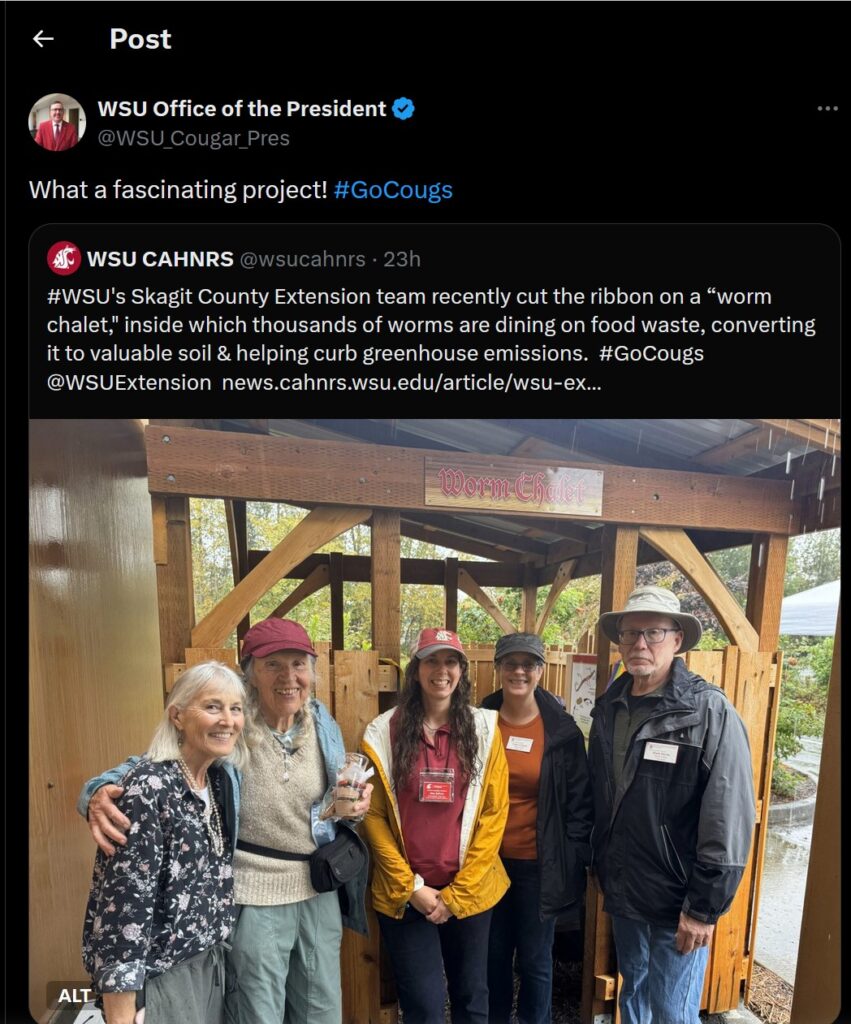
Master Gardener volunteers showcased a worm compost bin and hosted an outreach booth on composting and food waste prevention, engaging with attendees and emphasizing the environmental benefits of composting, such as reducing landfill waste and enriching soil health. Additionally, a blog post on soil health was published to reinforce key event messages and inspire sustainable gardening practices. The event highlighted the shared responsibility of supporting a healthier, more sustainable food system.
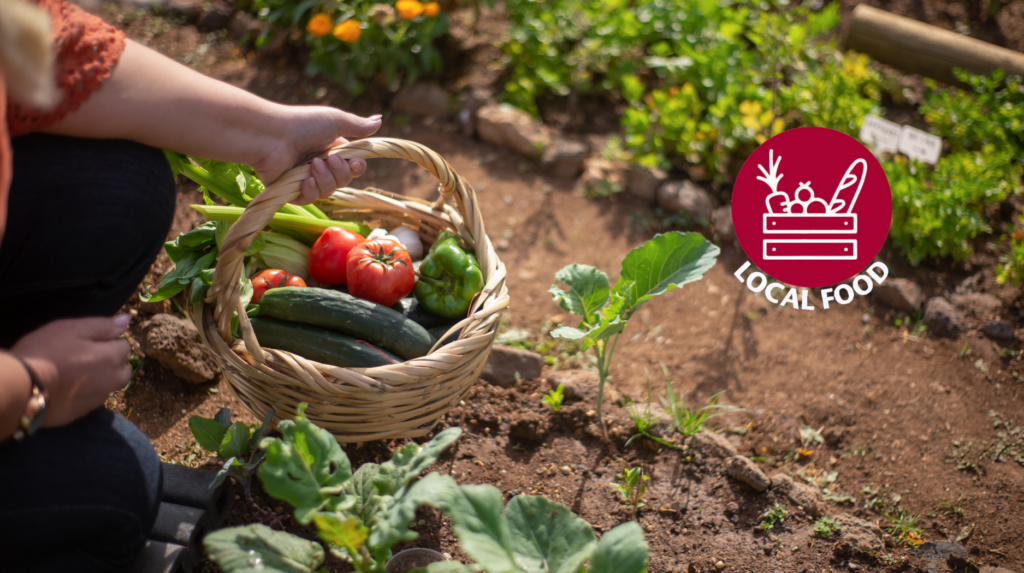
Stevens County faces significant economic challenges, with household incomes falling below 65% of the state’s median and unemployment rates exceeding the state average by 25% or more. These factors highlight the critical role of local food banks in ensuring access to fresh and healthy produce for community members. In 2024, the Colville Food Bank partnered with Extension Stevens County Master Gardener Program volunteers to revitalize raised garden beds originally built by the Boy Scouts. This collaborative effort led to the creation of a “Local Food” Demonstration Garden, which produced 294 pounds of fresh produce, all donated to the food bank.
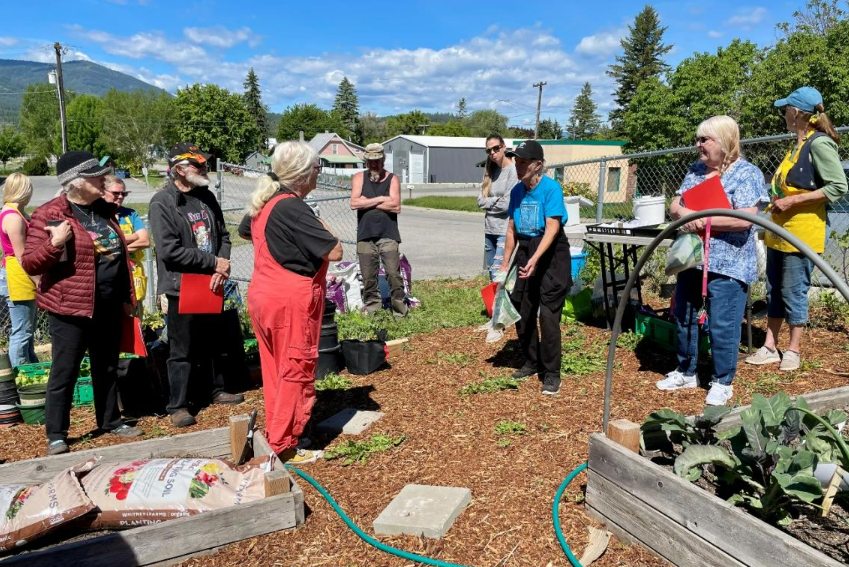
The master gardeners further engaged the community by organizing educational events, including the Colville Grow-Your-Own-Row program, where attendees received seeds, seedlings, grow bags, and soil to kickstart their own gardening projects. Participants showed enthusiasm, asking many questions about growing vegetables and how to sustain their gardens. With partnerships involving SNAP-Ed and other programs, along with the addition of educational signage, the initiative aimed to inspire food bank customers and visitors to adopt gardening practices that are cost-effective and suitable for the local climate. Plans are in place to expand the garden and offer additional classes in 2025, fostering greater food security and self-reliance within the community.
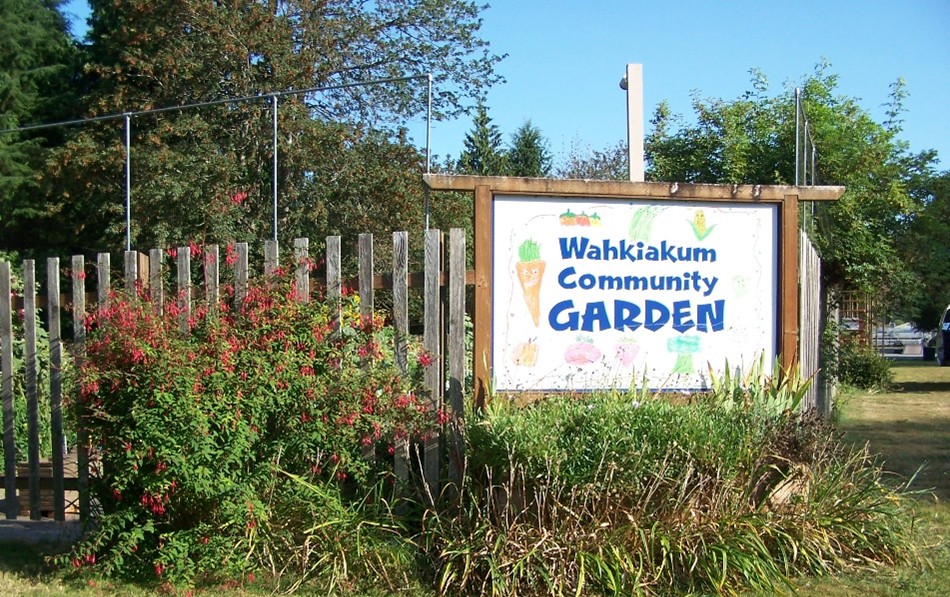
Wahkiakum County has faced persistently high rates of food insecurity, further intensified in recent years by inflation and rising food costs. WSU Extension Wahkiakum County Master Gardener Program volunteers dedicated over 1,200 hours to the Wahkiakum Community Garden, cultivating fresh produce for local food banks and teaching essential gardening skills. Through their efforts, more than 850 pounds of produce were donated to food banks in Cathlamet and Rosburg, providing much-needed support to those in need.
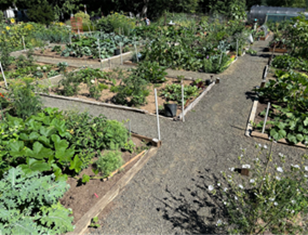
In addition to growing food, volunteers helped beginner gardeners learn food production techniques in the Community Garden. They hosted two community seed exchanges and gardening information events, attracting over 75 attendees. Collaboration with Wahkiakum High School brought students into the garden, where they assisted in building raised beds and other projects. A partnership with a local landscaping business led to the installation of a new water system, improving accessibility for both volunteers and garden plot users.
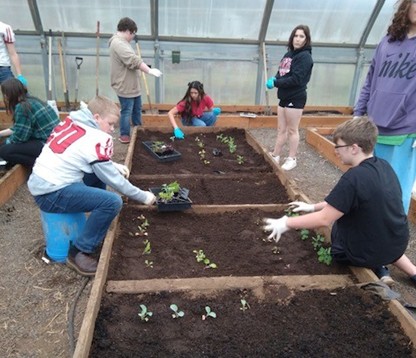
Master gardeners also partnered with the high school horticulture class, teaching the students propagation techniques as they raised tomato and pepper plants for the garden’s plant sale. Proceeds from the sale provided critical funding for garden supplies. Participants demonstrated their growing knowledge and enthusiasm, with 100% of garden plot users continuing their efforts into 2025. With produce valued at $3.00 per pound nationally, the 850 pounds donated were worth $2,550, underscoring the garden’s impact on both the community and food security efforts.