Throughout this site there are links to documents of various file types. Please contact our Statewide Program Leader if you require this information in a different format.
Protecting and enriching nearby nature
Engaging university-trained volunteers to empower and sustain diverse communities with relevant, unbiased, research-based horticulture and environmental stewardship education. Read about Extension Master Gardeners in the news around Washington state.

Public Value
The WSU Extension Master Gardener Program directly impacts community health by equipping individuals and families with science-based education that fosters physical and mental well-being, strengthens social connections, and builds resilient landscapes. Research shows that being in nature reduces stress, lowers the risk of cardiovascular disease, and improves cognitive function.
Through hands-on workshops and outreach, Master Gardeners empower individuals to create pollinator-friendly landscapes, urban gardens, and sustainable green spaces that reduce pollution, manage stormwater, and mitigate the urban heat island effect. These efforts improve air and water quality, and provide essential spaces for recreation and relaxation, ensuring that communities continue to benefit from nature’s health advantages for generations to come.
Issue
The rapid urbanization of both the United States and the world has resulted in over 80% of the U.S. population and more than 50% of the global population living in urban areas. In these cityscapes, natural elements such as parks, gardens, and trees play a critical role in enhancing the quality of life. Urban nature provides a range of essential benefits, including improved air and water quality, reduced urban heat island effects, and energy conservation. Access to natural spaces has also been shown to significantly enhance physical and mental health, creating daily positive impacts for countless individuals. Furthermore, these green spaces contribute to sustainable urban development through “green infrastructure,” supporting ecological balance in densely populated areas.
Consequences
The absence or degradation of urban nature can lead to serious consequences. Without these green spaces, cities face heightened pollution levels, worsening air and water quality, and increased heat retention that exacerbates urban heat islands. The lack of access to nature may harm residents’ physical and mental health, increasing stress, anxiety, and chronic illnesses. Additionally, neglecting urban nature compromises sustainable development efforts, hindering cities from mitigating environmental challenges effectively. These consequences underscore the vital importance of maintaining and expanding natural spaces within urban environments to ensure healthier, more resilient communities.
Outreach
The WSU Extension Master Gardener Program addresses urban nature challenges by equipping communities with skills to create and sustain green spaces. Through education and outreach, master gardeners teach sustainable gardening practices, improve soil health, and promote the use of native plants, enhancing the benefits of urban nature, such as better air and water quality, reduced urban heat island effects, and energy conservation. They collaborate with schools, organizations, and underserved populations, fostering community engagement and emphasizing the mental and physical health benefits of connecting with nature. By advancing green infrastructure initiatives and making urban nature accessible to all, the program supports the development of sustainable, resilient urban environments.
Significant accomplishments contributing to food security include:
- WSU Extension Master Gardener Program volunteers answered 10,592 questions about nearby nature, helping communities better understand and appreciate their local environment.
- A total of 1,026 classes were designed for adults, complemented by 11 classes specifically for youth.
- Demonstrations were conducted, with 375 sessions aimed at adults and 13 tailored for youth audiences.
- Workshops included 30 sessions for adults and 109 sessions for youth, offering hands-on learning opportunities.
- Field days provided immersive experiences through 1,508 sessions for adults and 370 sessions for youth.
- Overall, 6,924 adults and 6,230 youth gained valuable knowledge and skills in sustainable horticulture practices.
Reported impacts
- 30% enhanced understanding of the benefits of ENGAGING with nature at both individual landscape and broader community levels.
- 26% greater recognition of the role a home landscape plays in SUPPORTING the local ecosystem.
- 25% increased awareness of shared green spaces and green infrastructure as valuable community resources, along with the RESPONSIBILITY of individuals in safeguarding their benefits.
- 29% improved knowledge of how to OPTIMIZE the advantages of nature in the home landscape through thoughtful design, plant selection, and maintenance.
- 30% strengthened ability to SELECT the right plant for the right location to promote sustainability and resilience.
- 59% COMMITTED to spending more time outdoors.
Doing our part
On June 29, 2024, the Natural Demonstration Garden at Pacific Park hosted an “Herbs for Every Kitchen” learn-and-serve workshop. The event welcomed nine attendees for an engaging session led by WSU Extension Clark County Master Gardener Program volunteer Joanne Roth, who shared practical tips and techniques for cultivating culinary herbs. Using a variety of plant specimens, she demonstrated the best methods for propagating herbs, whether by seed or cutting.
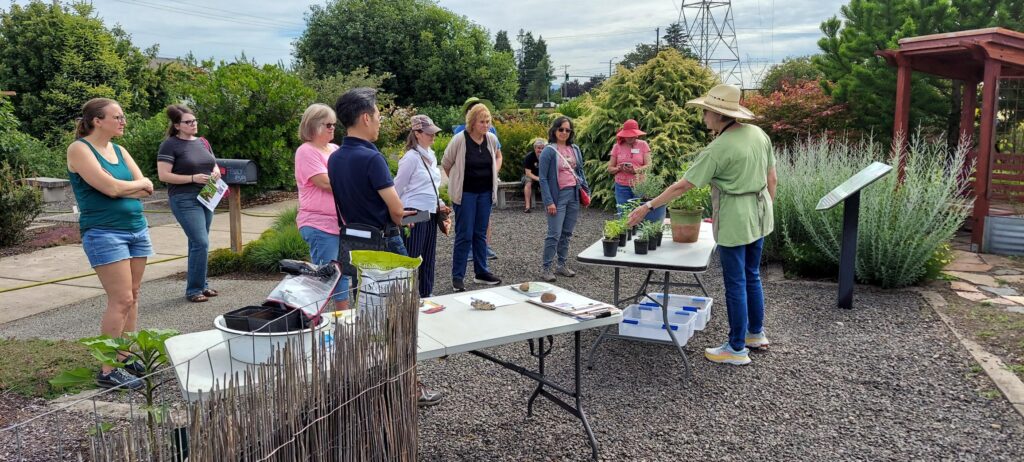
Joanne also provided a hands-on demonstration on potting herbs, emphasizing the use of seed starting or potting mix instead of garden soil for optimal results. The workshop concluded with an informative discussion on common pests and diseases, along with eco-friendly strategies for managing them without pesticides.
The event offered participants valuable insights for growing their own fresh, flavorful herbs.
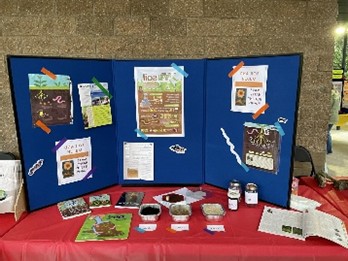
Education begins with the youth. In 2024, the WSU Extension Snohomish County Master Gardeners hosted their inaugural Family Nature Day. The event aimed to educate children and their parents about the natural environment in an engaging manner. Upon arrival, children received ‘passports’ which they could get stamped at each booth they visited. One booth focused on soil health, featuring displays and examples of various soil types. Child-friendly publications and books were available, and children had the opportunity to examine soil samples under a microscope to observe tiny soil organisms.