Fostering Flourishing Ecosystems
Throughout this site there are links to documents of various file types. Please contact our Statewide Program Leader if you require this information in a different format.
Building resilient ecosystems through community action
Engaging university-trained volunteers to empower and sustain diverse communities with relevant, unbiased, research-based horticulture and environmental stewardship education. Read about Extension Master Gardeners in the news around Washington state.

Public Value
The WSU Extension Master Gardener Program drives lasting environmental impact by equipping communities with science-based knowledge and practical strategies to cultivate plant biodiversity and invasive species management. Through volunteer-led education, the program empowers individuals to restore native habitats, support pollinators, and enhance soil health, ensuring resilient ecosystems that sustain local food production and public health.
These efforts may lead to measurable behavior change, with participants adopting sustainable gardening practices that reduce chemical inputs, improve water conservation, and strengthen biodiversity.
Issue
Earth’s biodiversity is declining at an alarming rate, with species facing extinction at an unprecedented pace. Biodiversity is essential for maintaining healthy ecosystems, which provide critical services such as pollination, water purification, and climate regulation. Raising awareness of local environmental challenges can motivate actions to protect native and at-risk species. Individual efforts, such as reducing lawns, controlling invasive plants, and planting native species, contribute to preserving biodiversity on both local and regional scales.
Consequences
The loss of biodiversity has profound ecological and human impacts. Ecosystem functions and stability weaken, compromising essential services like food production, clean water, and breathable air. This leads to greater vulnerability to pests and diseases, reduced agricultural yields, and intensified water scarcity. Furthermore, the loss of genetic diversity within species increases the risk of inbreeding and extinction. This decline in biodiversity not only endangers ecosystems but also jeopardizes human health and well-being, underscoring the urgent need for conservation efforts.
Outreach
Volunteers with the Extension Master Gardener Program are instrumental in promoting the stewardship of diverse ecosystems. They focus on educating communities about invasive species management, conserving native species, and restoring landscapes, fostering the growth of healthy, thriving, and biodiverse environments.
Here are some notable achievements and activities:
- Reached 6,571 adults and 2,511 youth through educational outreach, raising awareness about the importance of biodiversity.
- Answered 8,527 biodiversity-related inquiries at Ask a Master Gardener plant clinics.
- Conducted 656 adult classes and 13 youth classes, educating about the significance of biodiversity and invasive species management.
- Hosted 112 adult demonstrations and 12 youth demonstrations, offering visual insights into biodiversity concepts.
- Held 15 workshops for adults and 35 for youth, providing practical tools to support biodiversity initiatives.
- Organized 1,315 field days for adults and 402 for youth, delivering hands-on experiences to deepen connections with biodiversity efforts.
These contributions highlight the program’s commitment to fostering ecological awareness and action within communities.
Reported impacts
- 21% improved understanding of the VITAL ROLE plant biodiversity plays in human health and well-being.
- 22% greater awareness of the actions individuals can take to PROTECT plant biodiversity, including reporting and removing invasive species, replacing lawns, and supporting native plant growth.
- 19% enhanced knowledge of how invasive species negatively IMPACT ecosystems, agriculture, and infrastructure.
- 19% deeper recognition of human INFLUENCE on species biodiversity and the ways individuals can contribute to conservation efforts.
- 84% COMMITTED to removing invasive plants in their home landscapes.
Doing our part
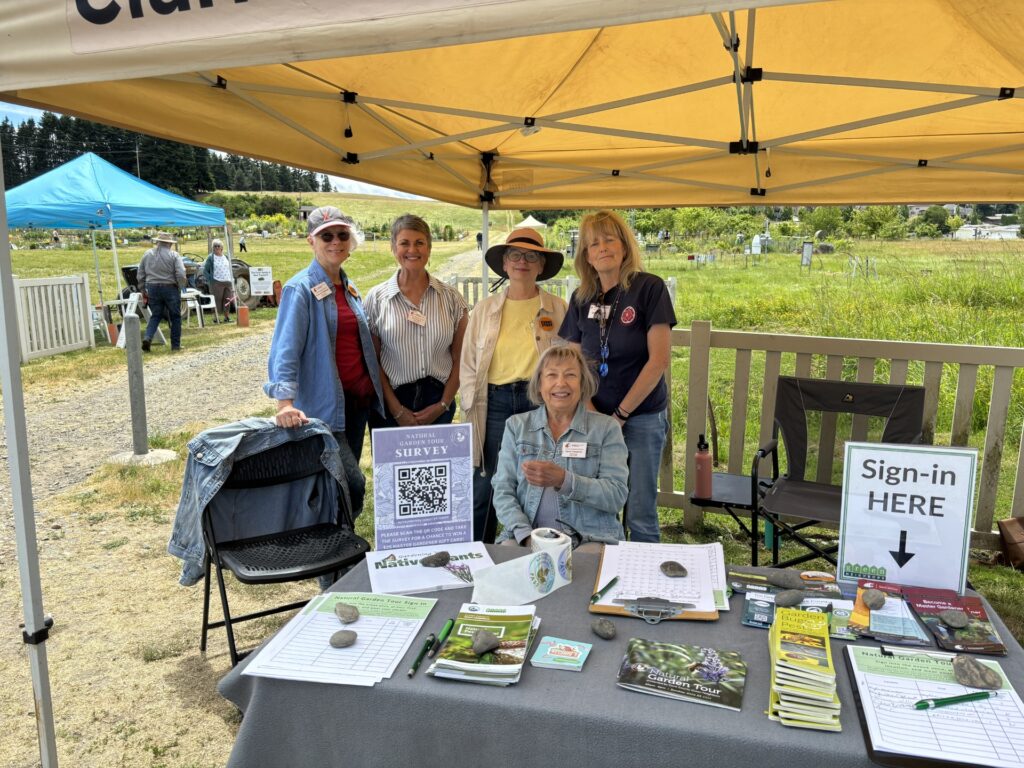
Home gardeners have a range of sustainable techniques at their disposal, including planting native and drought-tolerant species, composting organic waste to enrich soil, conserving water through efficient irrigation, using mulch to retain moisture, and steering clear of peat-based soil mixes. These practices, among others, were showcased during the 2024 Natural Garden Tour, an event organized in partnership with Clark County Public Health. Extension Clark County Master Gardener volunteers meticulously selected ten gardens for the tour, emphasizing their use of natural gardening methods. At each location, master gardeners engaged with visitors by highlighting garden features and answering questions, reaching 865 unique attendees and recording a total of 2,202 visits.
The event proved to be an educational success, enhancing participants’ understanding of various sustainable gardening practices. Attendees gained insights into backyard composting and the benefits of using compost to build nutrient-rich soil, the importance of planting native species to minimize reliance on herbicides, insecticides, and fertilizers, and the effectiveness of natural pest control methods as alternatives to synthetic pesticides.
Inspired by the tour, many attendees reported plans to incorporate these practices into their gardening routines. Common commitments included using compost, reducing lawn size, cutting back on synthetic chemical use, planting native plants, and adopting natural pest control strategies. The tour not only educated participants but also motivated them to take actionable steps toward sustainable gardening and climate resilience.