Throughout this site there are links to documents of various file types. Please contact our Statewide Program Leader if you require this information in a different format.
Empowering communities to protect pollinator health
Engaging university-trained volunteers to empower and sustain diverse communities with relevant, unbiased, research-based horticulture and environmental stewardship education. Read about Extension Master Gardeners in the news around Washington state.

Public Value
The WSU Extension Master Gardener Program directly impacts pollinator health and conservation by teaching sustainable gardening practices that protect and restore vital habitats. Through science-based education and hands-on community engagement, the program empowers individuals to create pollinator-friendly landscapes, ensuring stable food production and biodiversity preservation. By supporting native plant growth, advocating for pesticide alternatives, and reducing environmental stressors, Extension Master Gardeners actively strengthen pollinator populations, safeguard essential ecosystem services, and drive long-term environmental resilience.
Issue
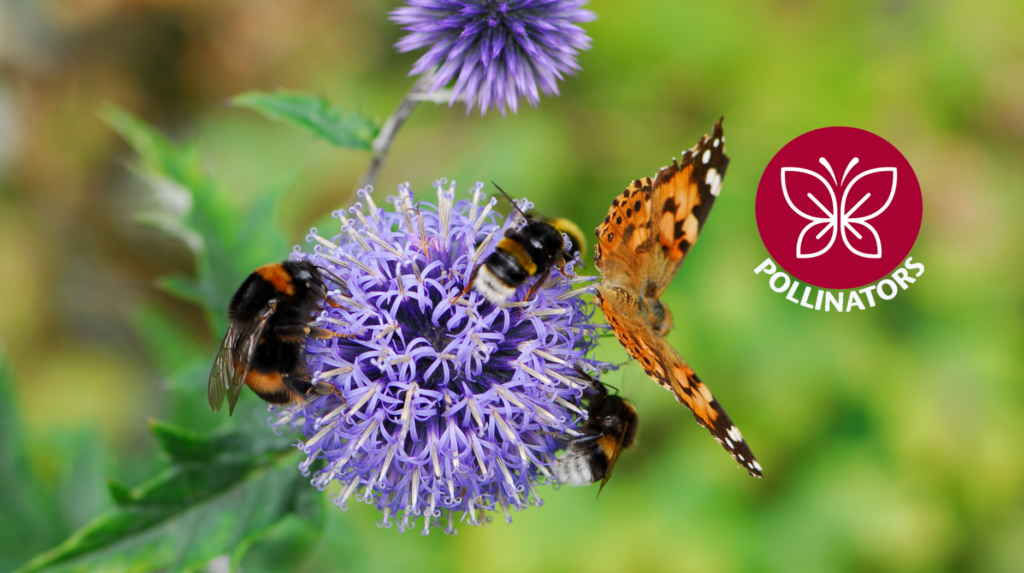
While much attention has been given to the decline of European honeybees and Colony Collapse Disorder, native bees are also experiencing a significant population decline. A study by Dr. Robbin Thorp and the Xerces Society found that two of the nearly 50 bee species native to North America are at risk of extinction. Bees, responsible for pollinating about 90% of wild plants, face alarming trends, with over half of native bee species in decline. Nearly one in four native bees is at risk, and 40% of insect pollinators are under substantial threat, according to the Center for Biological Diversity.
Consequences
The decline in pollinators poses severe ecological and human challenges. Pollination, an essential process for survival, supports approximately 80% of food-producing plants, and one in every four bites of food relies on pollinators. The global decline of insect pollinators threatens food security by reducing agricultural productivity. Additionally, pollination is critical for the reproduction of flowering plants, which helps prevent erosion, filter water, sequester carbon, and produce oxygen. Without these vital functions, ecosystems become destabilized, and human well-being is jeopardized.
Outreach
WSU Extension Master Gardener volunteers play a pivotal role in addressing this issue by educating communities on supporting native bees and other pollinators in home and community landscapes.
- Extension Master Gardener volunteers addressed 3,205 pollinator health and habitat-related questions at Ask a Master Gardener plant clinics.
- A total of 669 classes focused on pollinator diversity, examining the impact of human activities like pesticide use, habitat destruction, air and light pollution, and invasive species on pollinator well-being.
- In 163 demonstrations, strategies for supporting pollinator conservation were showcased, including creating native pollinator habitats, selecting pesticide alternatives, using pollinator-safe pesticide methods, and transitioning lawns to pollinator-friendly landscapes.
- During 79 hands-on workshops, participants engaged in building pollinator habitats and learned techniques for cleaning solitary bee nests.
- Through 1,388 field days, participants experienced pollinator health and habitat conservation practices firsthand.
Reported impacts
- 21% of attendees developed a deeper understanding of pollinators’ role in natural ecosystems and food production.
- There was a 22% increased awareness of pollinator diversity and the importance of plant-animal relationships for resilience.
- An 18% increase in recognizing how human activities negatively impact pollinators and the environment.
- 32% of attendees gained confidence in providing essential habitat for local pollinators.
- 14% improved knowledge of selecting alternatives to chemical pesticides to protect pollinators.
- 13% of participants learned the benefits of replacing traditional lawns with pollinator-friendly landscaping.
- 10% felt more confident in their ability to identify and choose pollinator-friendly plant species.
- 33% had a better understanding of the differences between native bees and honeybees.
Doing our part
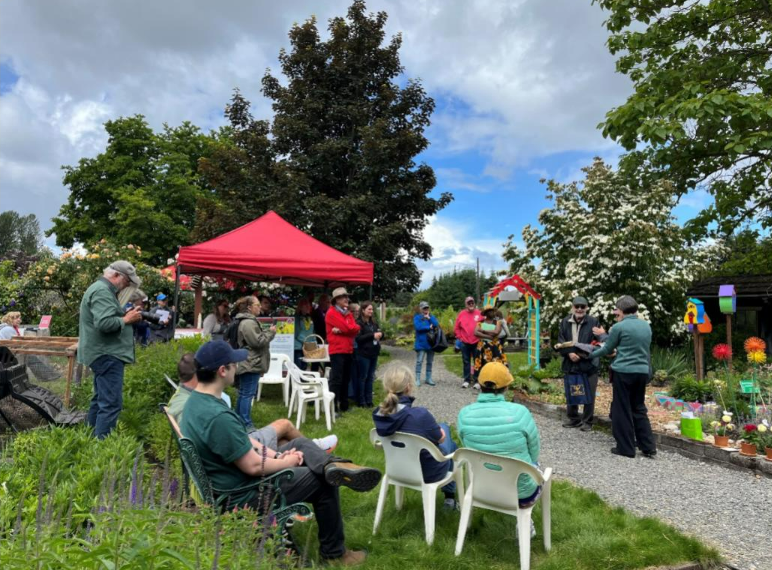
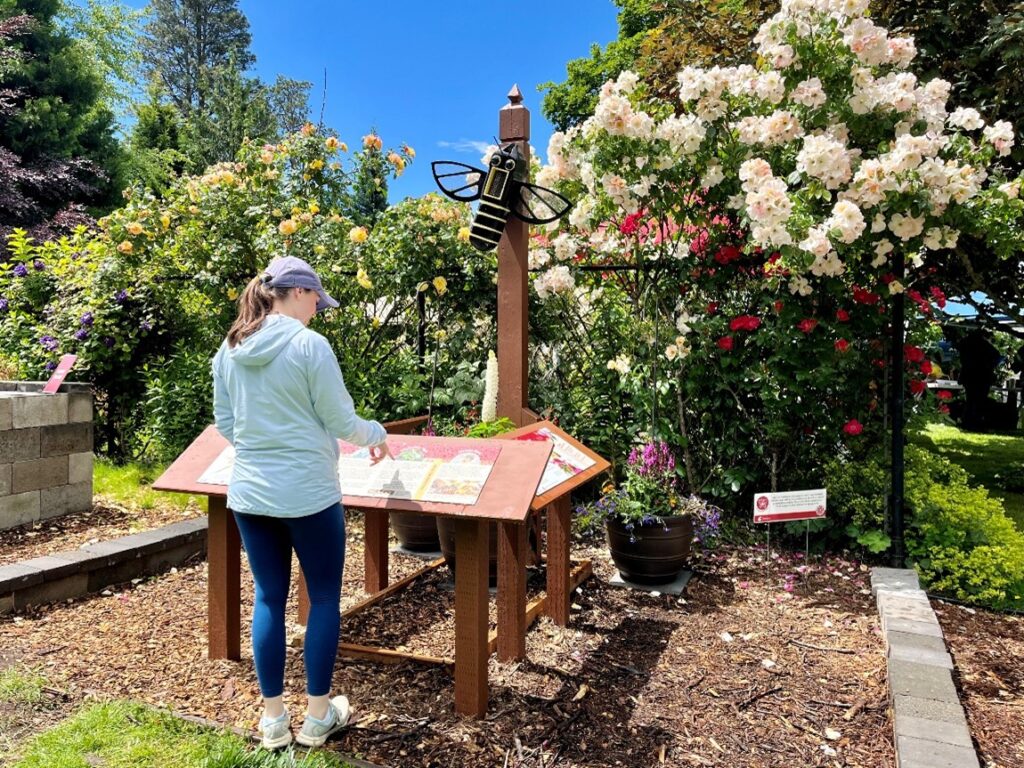
In collaboration with the City of Puyallup, the WSU Extension Pierce County Master Gardener Program celebrated National Pollinator Week with an engaging event titled “Celebration of Pollinators.” This special event marked the unveiling of a new pollinator education station at their demonstration garden. The station features a solitary bee nesting block mounted on a central post, surrounded by pollinator-friendly plants, and accompanied by three large educational signboards.
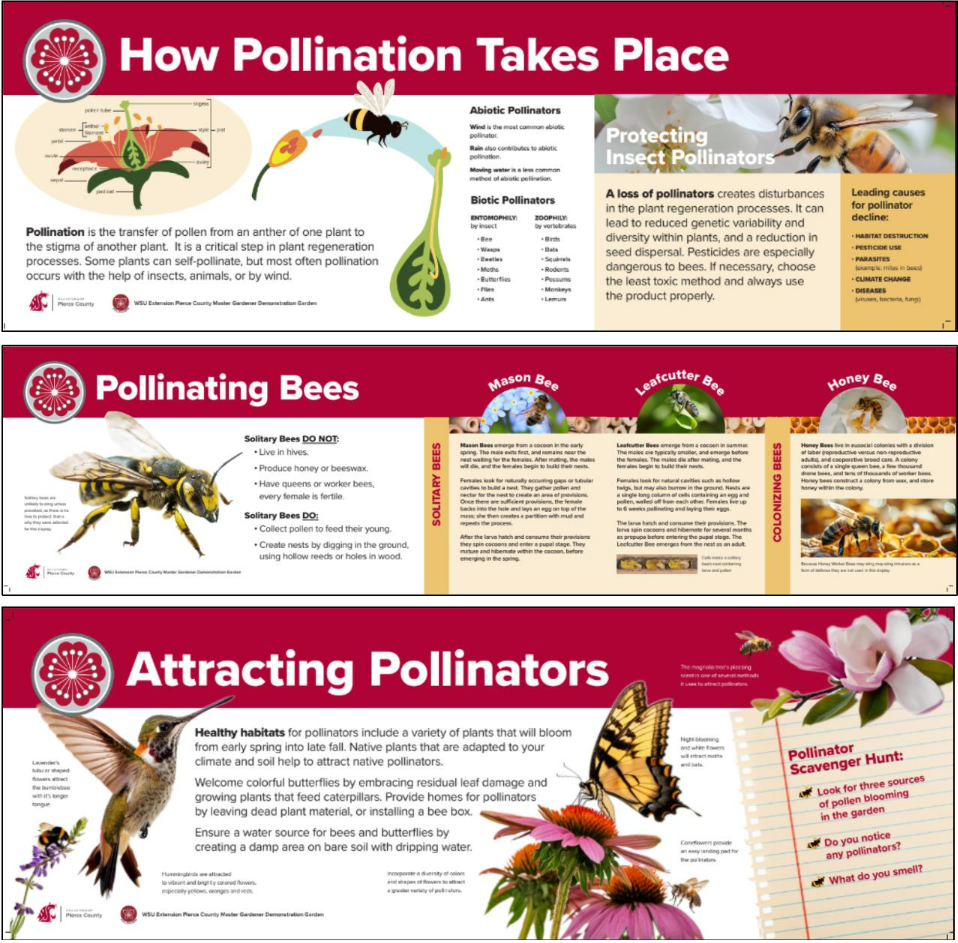
The event offered a variety of activities, including adult classes, children’s programs, and informational tables from community partners committed to pollinator health. Attendees explored topics such as the importance of pollinators, the best plants for attracting them, and how to rent and host solitary bees at home.
Participants shared key takeaways from the event:
- “Pollinators need every level of plants, from ground cover to trees.”
- “It’s important to clean bee homes.”
- “Solitary bees pollinate 95% of the plants they visit.”
When asked how they planned to use their new knowledge, participants responded:
- “I’ll advocate for the value of solitary bees to fellow gardeners.”
- “I’m planning to add Douglas Aster to my garden.”
- “I’ll share what I learned and create educational materials to inform others.”
This event successfully raised awareness and inspired actionable steps to support pollinator conservation.
Mason bees, native solitary pollinators, are exceptionally efficient, with just six bees performing the same pollination as 360 honeybees. Anne Bulger, a WSU Extension Clark County Master Gardener, advocates for these bees by offering educational presentations to inspire public support. On March 9, she spoke to a packed audience at the Camas Library, sharing insights on mason bee life cycles, care timelines, and techniques to protect them from parasites and diseases, emphasizing integrated pest management.
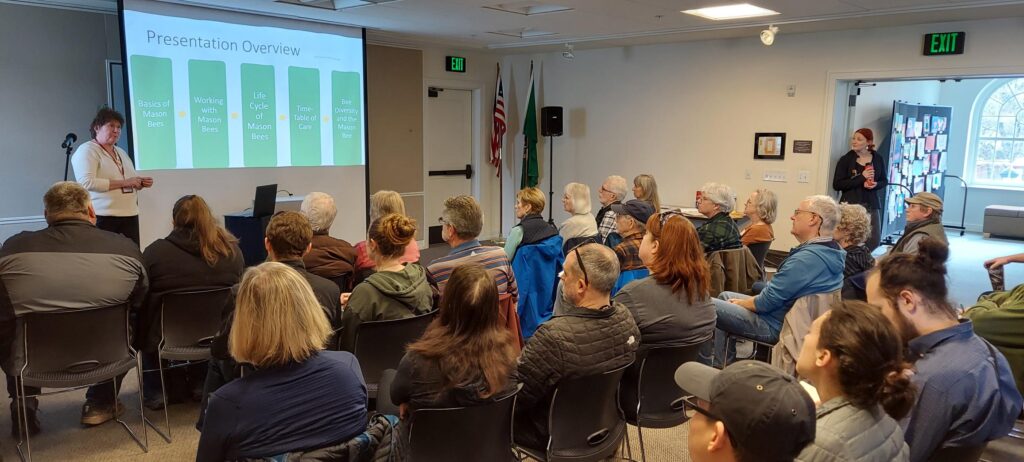
Attendees ranged from experienced hosts to newcomers eager to support this “uber-pollinator.” The event highlighted the importance of pollination and practical methods for nurturing mason bees. A quiz rewarded one participant with a mason bee box.
Post-workshop evaluations revealed significant learning gains. Of the 47 participants who completed surveys, many reported a stronger understanding of mason bees’ environmental contributions, the importance of bee diversity, and threats facing native pollinators. The session was highly rated, achieving an overall score of 4.8 out of 5.
I plan to start my own care and game plan for mason bees. I am new to caring for mason bees and am excited to get started after taking this workshop. Anne was great!
Workshop attendee