Throughout this site there are links to documents of various file types. Please contact our Statewide Program Leader if you require this information in a different format.
Teaching water conservation locally
Engaging university-trained volunteers to empower and sustain diverse communities with relevant, unbiased, research-based horticulture and environmental stewardship education. Read about Extension Master Gardeners in the news around Washington state.

Public Value
The WSU Extension Master Gardener Program drives lasting environmental stewardship by equipping communities with science-based water conservation practices that safeguard public health, protect ecosystems, and ensure the sustainability of local water resources. Through education, outreach, and hands-on demonstrations, volunteers provide individuals with the knowledge and tools to reduce pollution, improve water quality, and strengthen resilience against environmental challenges. Their efforts seek to lower municipal costs, enhance local water systems, and foster a culture of sustainability, ensuring that clean, accessible water remains available for future generations.
Issue
Water is a limited resource, and access to clean, drinkable water is becoming increasingly critical. Erratic and drier weather patterns heighten the risk of droughts and water shortages, emphasizing the need for proactive conservation. Residential landscapes can significantly increase water usage, often tripling the average homeowner’s consumption during the growing season. According to the EPA, outdoor water use in U.S. homes accounts for nearly 8 billion gallons per day, primarily for landscape irrigation. Employing water-efficient design principles and irrigation systems is vital to conserving this precious resource.
Consequences
Excessive water usage has far-reaching consequences. Environmental degradation is a major concern, as overuse can deplete natural water sources, harm ecosystems, and reduce biodiversity. The financial burden also rises with increased water treatment and infrastructure demands. Agricultural productivity is threatened by water scarcity, resulting in lower crop yields and higher food prices. Additionally, social impacts include conflicts over limited water resources and the displacement of communities due to shortages. Implementing sustainable water management practices is essential to addressing these challenges and ensuring long-term water security.
Outreach
Extension Master Gardener volunteers are dedicated to promoting water conservation through education and hands-on experiences. Their efforts empower individuals to implement sustainable practices, helping protect this finite resource for the benefit of people, agriculture, and the environment.
Here are some highlights of their impactful initiatives:
- Educated 2,623 adults and 739 youth on the importance of conserving water and its role in supporting people, agriculture, and ecosystems.
- Answered 2,488 water conservation-related inquiries at Ask a Master Gardener plant clinics, guiding gardeners toward efficient practices.
- Taught 149 classes focused on water-saving strategies for home landscapes.
- Conducted 95 demonstrations to visually showcase techniques for reducing water usage in landscaping.
- Organized 35 hands-on workshops where participants practiced water-conserving gardening and irrigation methods.
- Hosted 307 field days to provide real-life examples of effective water conservation principles in action.
- Maintained 129 demonstration gardens that feature waterwise gardening practices.
These initiatives play a crucial role in fostering community awareness and action for sustainable water management.
Reported Impacts
Of those surveyed:
- 26% improved understanding of how water conservation BENIFITS people, agriculture, and the environment.
- 31% gained understanding of how home landscapes IMPACT the local watershed and water quality.
- 31% improved understanding of how individual landscapes INFLUENCE water availability and conservation.
- 27% improved understanding of key water conservation PRINCIPLES and their impact on sustainability.
- 28% learned ways to CONSERVE water through specific, sustainable techniques.
- 75% COMMITTED to adapting their home landscape to local conditions to conserve water.
Doing our part
The 7th annual Eco-Gardening Symposium, held in April 2024, highlighted water conservation strategies and was co-sponsored by the Master Gardener Foundation of Grant-Adams Counties and the Columbia Basin Conservation District. The event attracted over 180 attendees and included talks on regional water history, future water availability, and the advantages of planting native and drought-tolerant species. Presentations offered insights into effective sprinkler system designs, suitable plant choices for the area, and waterwise landscaping techniques.
Resource vendors provided information on soil testing, urban gardening alternatives, seed libraries, and water conservation education, while native and drought-tolerant plants were available for purchase. A WSU Extension Grant-Adams County Master Gardener Program plant clinic also emphasized water-saving principles. Attendees were inspired by the recommended plant lists and many planned to replace lawns with native, drought-tolerant plants, recognizing these as practical, cost-saving solutions to water issues. The event fostered greater understanding and action toward sustainable water conservation practices.
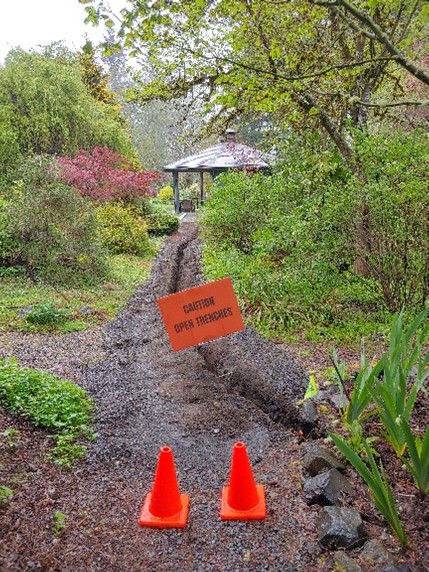
The WSU Extension Thurston County Master Gardener Program has a dedicated committee of volunteers who have been working for several years to plan the replacement of irrigation systems across all Thurston County demonstration gardens. This committee includes representatives from each of the three demonstration gardens and collaborates with various municipal entities involved in garden management, such as the City of Olympia and Thurston County Public Works Solid Waste Department.
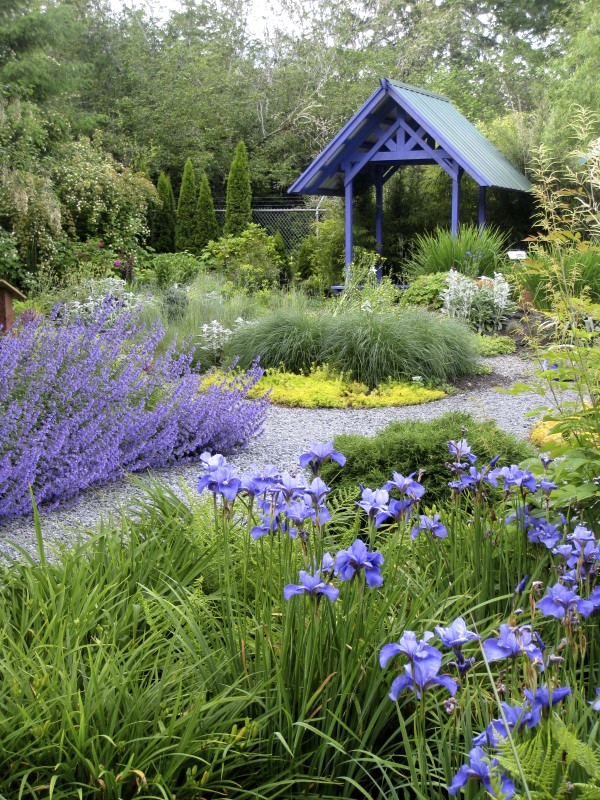
To align with best practices in gardening and promote efficient, water-wise resource use, the Irrigation Committee selected the Dirt Works Demonstration Garden as the starting point for this project. Spanning approximately 35 years of history, Dirt Works includes an ornamental garden, a food bank garden, and a year-round plant nursery.
The project has already produced results: the water bill for Dirt Works has been reduced, and the physical labor of hauling hoses to water the nursery is no longer necessary.
A total of 643 local residents attended educational events sponsored or taught by WSU Extension Spokane Master Gardener Program volunteers focused on water conservation. Additionally, 180 residents participated in organized tours of a water conservation demonstration garden maintained by Spokane County Master Gardeners, who dedicated 320 hours to recording data, weeding, and managing irrigation. Furthermore, 134 residents sought advice on conserving water in the landscape through plant clinics and information sessions. Local Master Gardener volunteer-written fact sheets on water conservation were downloaded 789 times from the county Extension website.
To evaluate the effectiveness of water conservation classes, pre- and post-class questions were used to measure knowledge shifts. Results showed a 35% positive knowledge shift regarding the benefits of water conservation and a 42% positive knowledge shift in response to the statement “I know techniques to conserve water in my existing landscape.” Additionally, there was a 46% positive knowledge shift in understanding the water needs of turf grass and a 50% positive knowledge shift in identifying native and drought-tolerant plants suitable for home landscapes. Medium-term surveys are currently underway to determine if this knowledge has led to action and behavior change.