Driving positive change
Throughout this site there are links to documents of various file types. Please contact our Statewide Program Leader if you require this information in a different format.
Building resilience in our communities
Engaging university-trained volunteers to empower and sustain diverse communities with relevant, unbiased, research-based horticulture and environmental stewardship education. Read about Extension Master Gardeners in the news around Washington state.

Public Value
The WSU Extension Master Gardener Program directly impacts communities’ efforts to combat climate change by teaching sustainable landscaping practices. Volunteers educate residents on strategies that reduce carbon footprints, minimize pollution, and lower greenhouse gas emissions. By conserving water, improving soil health, and supporting biodiversity, these practices create resilient landscapes that act as carbon sinks, absorbing and storing carbon dioxide. Through hands-on education, the program empowers communities to contribute to a cleaner environment and a more sustainable future.
Issue
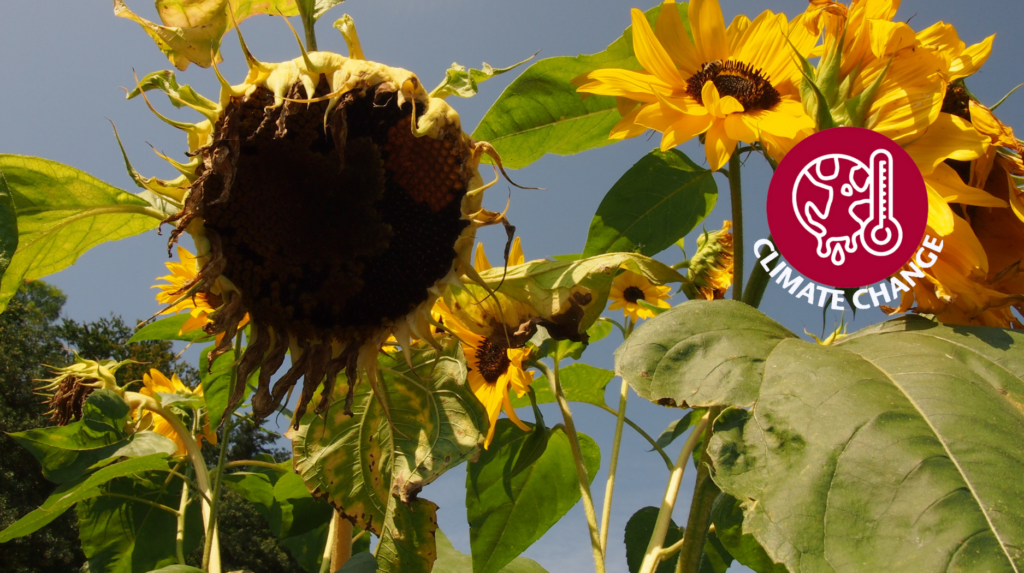
Our changing climate, marked by rising global temperatures, is resulting in warmer winters, increasingly hotter summers, and a surge in extreme weather events like floods, prolonged droughts, and violent storms. These shifts in climate significantly disrupt plant growth, altering everything from flowering cycles to crop yields. Plants are more vulnerable to stress as they attempt to adapt to these erratic patterns, and their health directly influences the ecosystems they support.
Consequences
The intricate relationships between plants and their associated organisms—such as insects, pollinators, beneficial microbes, and diseases—are being profoundly affected. Pollinators, for example, may become out of sync with flowering plants, while pests and pathogens may expand their ranges due to milder winters. These disruptions can ripple across ecosystems, threatening biodiversity and agricultural productivity. For gardeners and growers, this adds new challenges to maintaining healthy gardens and landscapes.
Outreach
Home gardeners have an invaluable role in combating climate change and fostering ecological resilience. By embracing climate-conscious practices—such as planting drought-tolerant and native species, conserving water through efficient irrigation methods, improving soil health with composting and mulch, and creating habitats for pollinators and beneficial insects—gardeners contribute directly to mitigating the effects of a changing climate. These efforts not only enhance the health of individual gardens but also have a ripple effect, bolstering the resilience of entire local ecosystems.
The Washington State University (WSU) Extension Master Gardener Program amplifies this impact through its robust outreach and education initiatives. By equipping home gardeners with science-based knowledge and practical tools, the program empowers individuals to adopt sustainable gardening techniques. From workshops on water-wise landscaping to guidance on managing plant diseases and pests in a warming climate, Master Gardeners help translate complex challenges into actionable solutions. Their work supports a network of gardeners who are prepared to respond to environmental changes with confidence and innovation.
Significant accomplishments contributing to climate resilience include:
- Climate Change Guidance: Extension Master Gardeners provided detailed information and support by addressing 2,830 questions related to climate change, helping community members navigate gardening challenges.
- Educational Outreach: Engaged 830 youth and 3,132 adults with science-backed gardening practices designed to promote climate resilience and sustainable landscapes.
- Classes: Conducted 6 youth-focused classes and 297 adult classes, delivering practical strategies for creating climate-resilient gardens and landscapes.
- Workshops: Offered 24 hands-on workshops, empowering participants to implement effective techniques for building resilient landscapes.
- Demonstrations: Delivered 24 demonstrations that allowed participants to gain deeper insights into establishing gardens capable of thriving amid changing climate conditions.
- Field Days: Hosted 497 interactive field days, fostering meaningful connections and in-depth learning about the principles of climate-resilient gardening.
Reported impacts
The efforts of home gardeners and the educational support provided by the WSU Extension Master Gardener Program create a powerful force for positive change. As these practices spread across communities, they build not only climate resilience but also a shared commitment to protecting and nurturing the environment. These partnerships pave the way for thriving, sustainable ecosystems that will support generations to come.
- 22% gained a deeper understanding of how climate change affects the environment, ecosystem functioning, and human health.
- 27% increased awareness of strategies to enhance landscape resilience in response to climate change.
- 23% gained knowledge of the significant impact urbanization has on climate change.
- 22% recognized how climate change disproportionately affects marginalized and underrepresented communities.
- 22% learned effective strategies for offsetting carbon emissions and reducing greenhouse gas pollution.
Doing our part

In 2024, a dedicated group of WSU Extension Pierce County Master Gardener Program volunteers launched the Climate Action Team (CATs) as a statewide initiative to address climate change through research-based education and sustainable gardening practices.
CATs volunteers develop specialized resources and educational materials that equip Extension Master Gardener Program volunteers with the tools they need to teach climate resilience in their communities. These materials support climate-friendly gardening techniques, pollinator conservation, and ecosystem protection, ensuring that Master Gardeners can effectively share knowledge and inspire local action.
By fostering a network of informed educators, the Climate Action Team amplifies its impact, helping communities across Washington build more resilient landscapes and sustainable gardening practices.
Climate change resources | Master Gardener Program | Washington State University
The WSU Extension Skagit County Master Gardeners designed and built a freestanding worm composting bin, known as the “Worm Chalet,” at the Skagit County WSU Extension office. This bin is used to compost food scraps collected from office activities, with both volunteers and office staff responsible for its maintenance. Since its installation in August, the Worm Chalet has successfully diverted over 200 pounds of food waste from the landfill. By weighing all waste added to the bin, the impact can be tracked and measured over time. Educational signage, including QR codes and links to the WSU Extension Skagit County website, provides information on food waste prevention, vermicomposting, soil health, climate change, and local food, furthering community outreach.
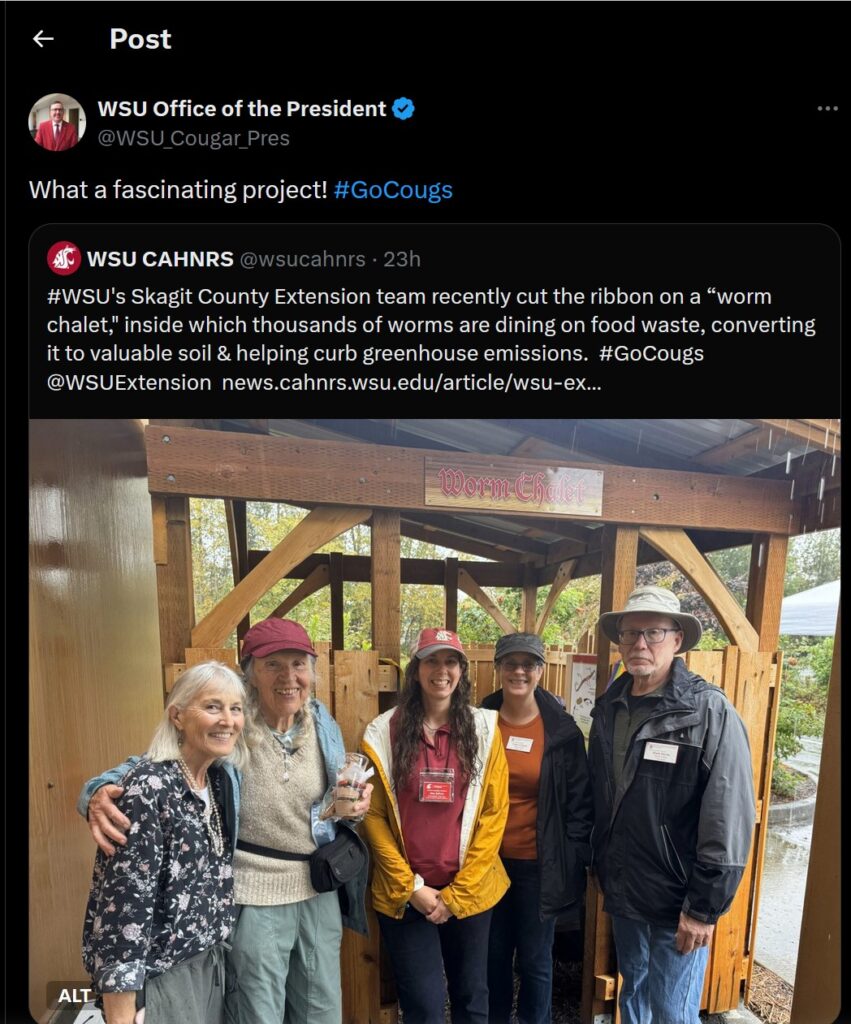
Collecting food waste and using it to feed the worms emphasizes the importance of reducing food waste and diverting organic material from landfills. Composting is crucial in reducing methane emissions and improving soil health.
WSU Extension Grays Harbor/Pacific County Master Gardener volunteers conducted workshops, published articles, and spearheaded outreach initiatives that addressed a wide array of crucial topics. Presentations at the Grays Harbor Home and Garden Show highlighted the benefits of installing rain gardens, emphasizing their ability to reduce runoff, filter pollutants, and provide critical habitat for local wildlife. Additional workshops and presentations across master gardeners offered insights into soil care, composting, and the “Right Plant, Right Place” approach, ensuring plants thrive in their ideal conditions. A terrarium-building workshop and a session on Seasonal Gardening addressed the need to adapt gardening practices to a changing climate.
These programs also delved into practical and sustainable gardening techniques. Topics included composting to minimize green waste, growing food locally to reduce carbon footprints, and constructing rain barrels for effective water conservation. Participants learned about no-till gardening, which minimizes soil disruption, enhances soil health, and reduces carbon emissions. Other discussions focused on adopting natural pest control methods to reduce chemical use, creating pollinator gardens to foster biodiversity, and utilizing native plants and mulch for improved garden sustainability.
“I did not realize that no-tilling is better than tilling my yard every year. I have always learned to turn the soil over would help my garden grow better.”
Class attendee


Find additional research-based articles from WSU on changing climate.