Soil Health: the Foundation of Every Garden
Engaging university-trained volunteers to empower and sustain diverse communities with relevant, unbiased, research-based horticulture and environmental stewardship education. Read about Extension Master Gardeners in the news around Washington state.
Composting, Conservation, and Community Soil Health
WSU Extension Spokane County Master Gardeners taught nine well‑attended soil‑health classes, reaching 845 adults with research‑based guidance on building healthier soils. They also answered 167 soil‑related questions through plant clinics and outreach events, provided locally relevant fact sheets that were downloaded 151 times, and led youth composting workshops that introduced 551 students to the “compost critters” that transform organic waste into a valuable garden resource.
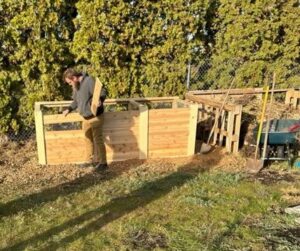
A Washington Department of Ecology citizen participation grant, awarded to the Master Gardener Foundation of Spokane County, further strengthened this work by funding the construction of 36 three‑bin compost systems for community gardens. Master Gardeners provided training for every site, ensuring gardeners could confidently use the bins to recycle organic waste and build healthier soils.
Adult class surveys showed a 47 percent increase in knowledge about managing soils for vegetable production. Participants reported strong intentions to adopt soil‑building practices, including soil testing before fertilizing, using no‑till methods to reduce erosion, composting kitchen and yard waste, and mulching with organic materials to improve soil structure and fertility.
Follow‑up surveys from compost‑bin recipients documented that approximately 6.75 tons of organic waste were diverted from the landfill and turned into compost for local food‑growing spaces. This reduced waste‑management costs for Spokane County while improving soil health for community gardeners. Through education, hands‑on support, and community partnerships, Master Gardeners helped residents build healthier soils and more resilient local food systems.
Inspiring the Next Generation of Composters
WSU Extension Pierce County Master Gardener Volunteers partnered with the Pierce College Biology Department to give students hands‑on experience with sustainable gardening practices during tours of the Puyallup Demonstration Garden. Three groups of biology students learned how food can be grown in urban spaces, explored water‑wise gardening techniques, and gained practical knowledge about home composting. Many students said the composting portion of the tour was the most impactful.
During their visit, students learned how a three‑bin composting system works, the roles of greens, browns, air, and water, and how to manage turning and temperature for effective decomposition. They also discovered the broader benefits of composting, including reducing landfill waste, improving water retention in garden soils, and adding essential nutrients and organic matter.
Several students shared that they had been interested in composting but didn’t know how to begin. The clear explanations and real‑world demonstration at the Puyallup Demonstration Garden gave them the confidence to start composting at home. Through this partnership, Master Gardeners helped students connect classroom learning with practical skills that support healthier soils and more sustainable communities.
Building Soil Stewardship Through Hands‑On Learning
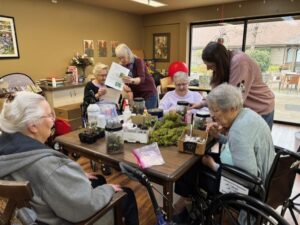
WSU Extension Grays Harbor and Pacific County Master Gardeners taught a series of workshops across both counties to help residents understand how everyday actions affect soil health. These sessions covered soil basics, composting, microorganisms, terrariums, and succulents, translating complex concepts into practical, research‑based guidance. Many of the classes were also brought directly to Channel Point Senior Living Center to expand access.
Participants learned how soil functions, how home gardening practices influence soil structure and fertility, and how composting and no‑till methods can reduce waste and protect soil life. Surveys showed strong learning gains across all workshops: a 34 percent increase in understanding soil components in Scoop on Soil, a 50 percent gain in composting knowledge, a 46 percent gain in soil structure and landscape impacts in All About Soil, and a 44 percent gain in understanding soil–plant relationships in the terrarium workshop. Even specialized sessions like Growing Succulents showed meaningful increases in knowledge.
Through hands‑on, accessible education, Master Gardeners helped residents see soil as a vital resource that must be protected and renewed—strengthening both home gardens and local ecosystems.
Throughout this site there are links to documents of various file types. Please contact our Statewide Program Leader if you require this information in a different format.