Growing Connections Between People and the Natural World
Engaging university-trained volunteers to empower and sustain diverse communities with relevant, unbiased, research-based horticulture and environmental stewardship education. Read about Extension Master Gardeners in the news around Washington state.
By the numbers (2025)
The WSU Extension Master Gardener Program strengthens Washington communities by helping people create and sustain healthy urban green spaces. Through accessible, research‑based education, volunteers teach climate‑smart and sustainable gardening practices that improve soil health, support native plants, and expand the many benefits of nearby nature—cleaner air and water, cooler neighborhoods, and reduced energy use. Their outreach reaches schools, community groups, and underserved populations, broadening access to the mental and physical health benefits of time spent outdoors.
In 2025, volunteers answered 12,247 questions about nearby nature and delivered 1,442 educational events for learners of all ages. Through these classes, demonstrations, workshops, and field days, a combined 11,172 participants gained practical skills in sustainable horticulture and stewardship.
57% of surveyed participants took steps to increase the benefits of nearby nature in their home landscape and community.
Protecting Nearby Nature Through Native Plant Rescue
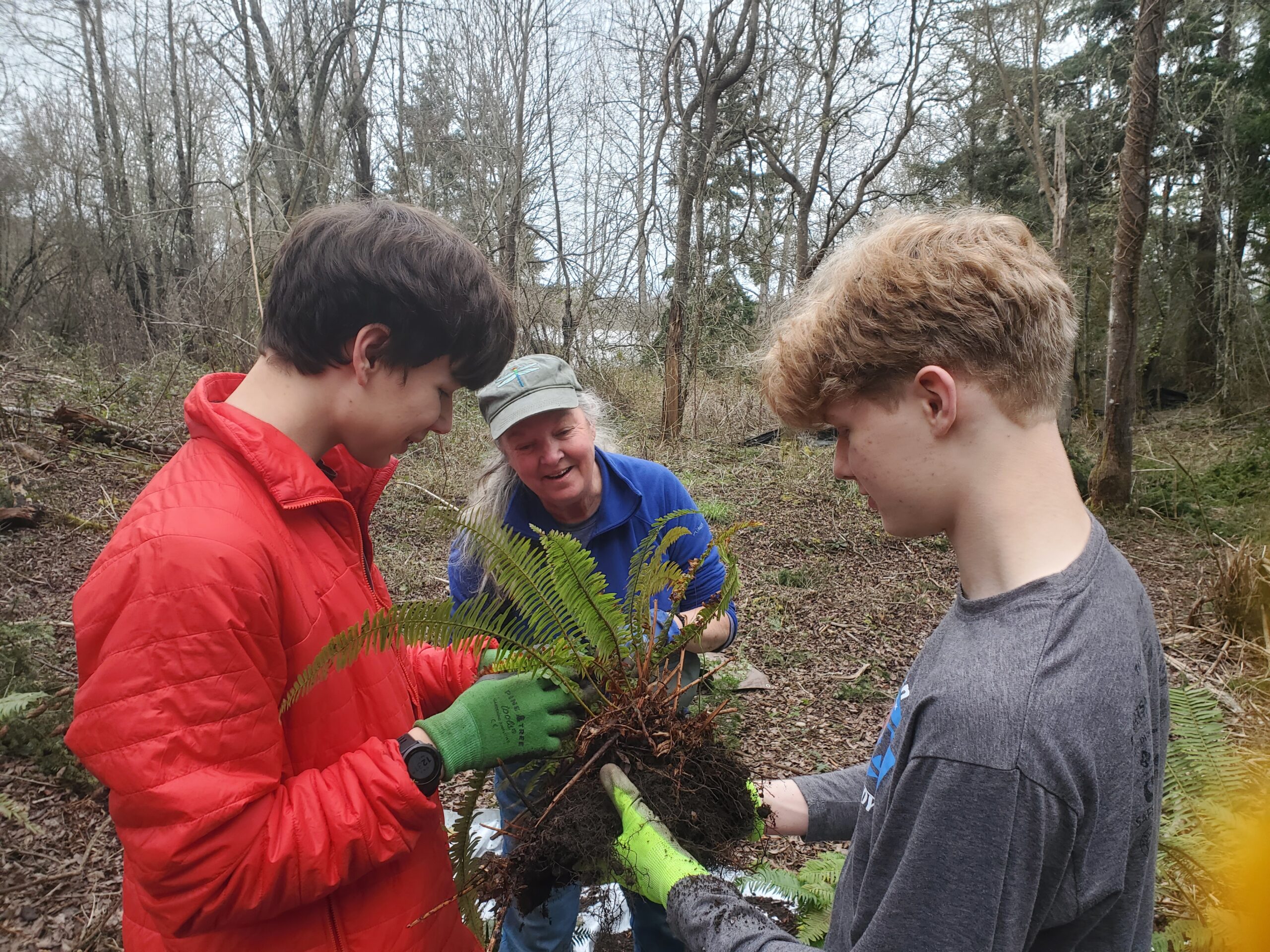
In a collaborative effort, four committed WSU Extension Jefferson County Master Gardener Program volunteers conducted a native plant salvage operation at a Habitat for Humanity home site prior to construction. Their work successfully preserved over 40 sword ferns, 20 starflowers, as well as several red flowering currants, snowberries, elderberries, and serviceberries. These rescued plants were relocated to a newly created rain garden at the Northwest School of Wooden Boat Building in Port Hadlock.
This rain garden serves a vital ecological purpose, capturing water runoff from the nearby road and protecting Port Hadlock Bay, situated just below the school. By filtering and intercepting runoff, it helps prevent pollutants from reaching the bay, ensuring cleaner water and supporting a healthier marine environment.
By the numbers (2025)
The WSU Extension Master Gardener Program strengthens the stewardship of Washington’s ecosystems by helping communities understand, protect, and restore plant biodiversity. Volunteers reached more than 7,404 residents of all ages through 1,048 educational events, offering practical, research‑based guidance on invasive species management, native plant conservation, and the creation of healthy, resilient landscapes. They also responded to 11,802 biodiversity‑related questions, ensuring individuals had the information needed to make informed decisions in their own yards and neighborhoods.
Evaluation results show clear gains in understanding and action. On average, 20% of participants increased their knowledge about the role of biodiversity, the impacts of invasive species, and how individual choices influence ecosystem health. Most importantly, 71% of surveyed participants committed to taking steps to increase plant biodiversity in their home landscapes and communities—actions such as removing invasive plants, adding native species, and redesigning yards to support habitat.
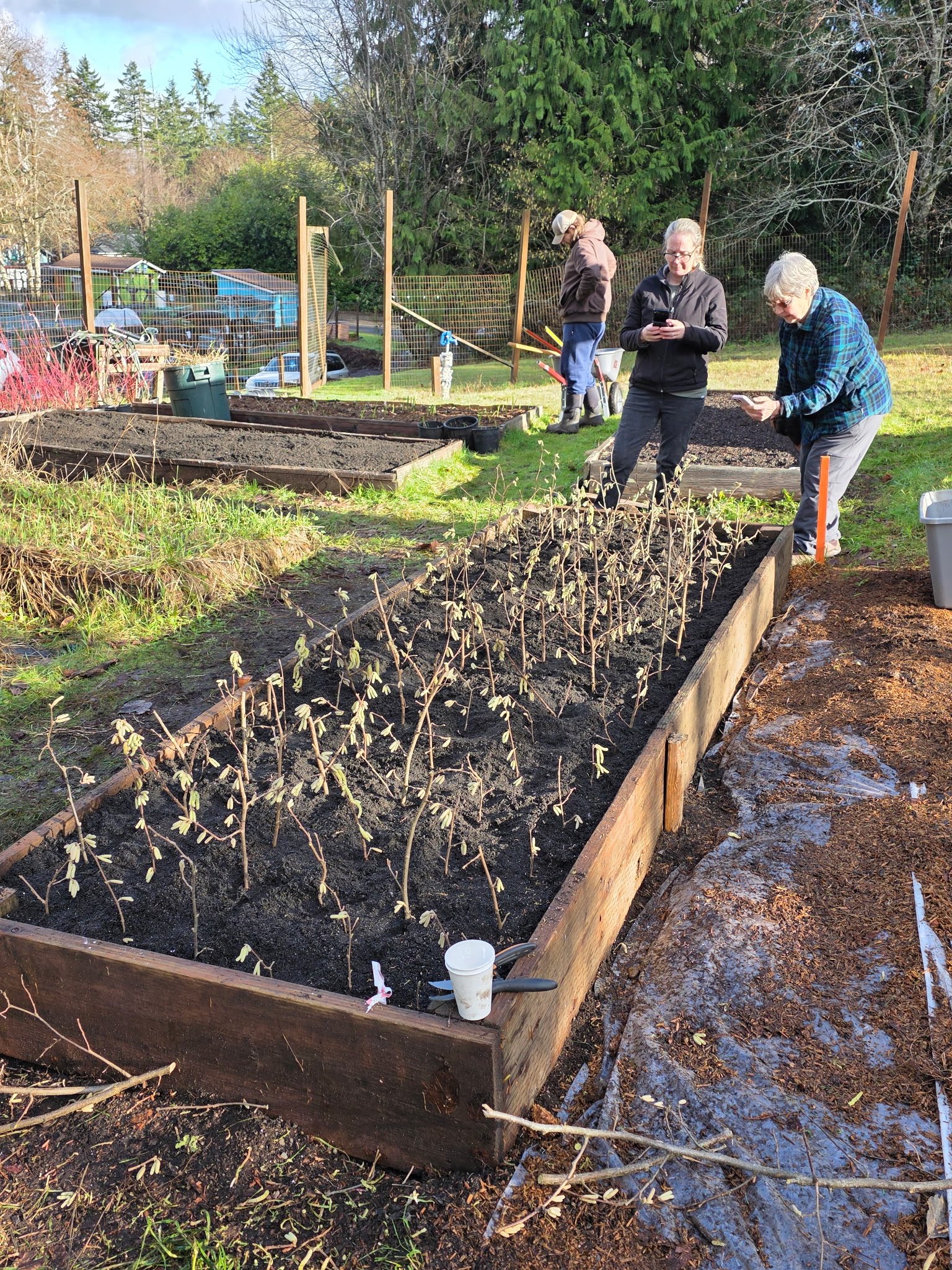
Protecting Plant Biodiversity One Yard at a Time
Washington’s rapid development and climate‑driven pressures are accelerating the loss of plant biodiversity, putting ecosystems and community well‑being at risk. To address this, the Mason County WSU Extension Master Gardeners educated 290 residents on topics such as native plants, invasive species management, seed saving, and climate‑resilient landscaping, using multiple teaching formats across the county to reach diverse audiences.
Participants reported meaningful learning and clear intentions to act: 94% planned to apply new skills in their own gardens, and 37% increased their knowledge of how native plants can strengthen biodiversity at home. Many committed to planting and propagating more native species, placing plants where they thrive, and paying closer attention to the ecological impacts of their gardening choices.
Through this work, Master Gardeners are empowering residents to make informed, biodiversity‑supporting decisions that help protect Washington’s ecosystems in a time of rapid change.
By the numbers (2025)
WSU Extension Master Gardener Program volunteers play a critical role in helping Washington communities reduce wildfire risk through fire‑resistant landscaping. In 2025, volunteers addressed 723 fire‑resistant landscaping inquiries at Ask a Master Gardener Plant Clinics and reached 1,819 youth and adults through 64 educational events, giving residents practical tools to create defensible space and make safer plant and material choices around their homes.
Participants reported increased knowledge of wildfire behavior, the risks facing communities in the Wildland‑Urban Interface, and the importance of individual responsibility in reducing ignition hazards. They also improved their ability to identify defensible space zones and design fire‑resistant landscapes.
Among those surveyed, 71% reported taking concrete steps to reduce wildfire risk in their home landscapes. They developed fire‑aware landscape plans, created defensible space by spacing plants and clearing debris, and selected fire‑resistant or low‑flammability plants. Many also pruned tree limbs away from structures, incorporated non‑flammable materials like gravel or stone, and ensured access to water sources for fire response. Several participants extended their impact by sharing wildfire preparedness tips with neighbors and community members, helping strengthen resilience across their communities.
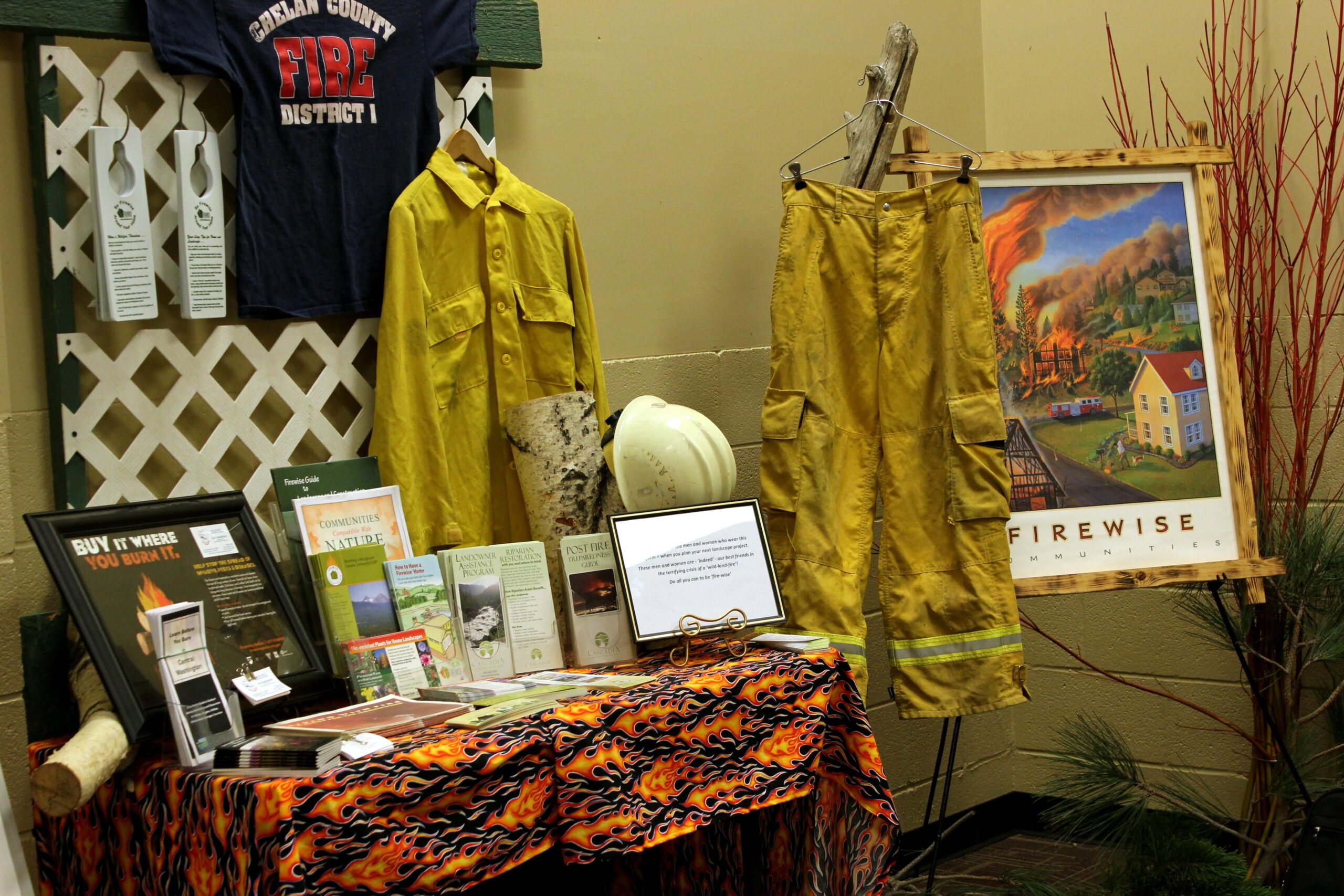
Building Fire‑Resilient Communities Through Education
In 2025, WSU Extension Chelan/Douglas County Master Gardener volunteers led a statewide effort to help Washington communities reduce wildfire risk through fire‑resistant landscaping. Through 17 presentations, hands‑on youth programs, Spanish‑language outreach, and specialized training for nearly 160 Master Gardeners, they equipped more than 700 residents with practical strategies to create defensible space, choose fire‑resistant plants, and reduce fuel loads around homes.
Their work strengthened neighborhood preparedness by advising homeowners associations, supporting fuel‑reduction projects with local and state partners, and helping secure mitigation funding for high‑risk communities. By integrating fire‑resilient landscaping into school curricula, Master Gardener training programs, and public education, their outreach expanded wildfire awareness and empowered Washingtonians to transform their landscapes into safer, more resilient spaces.
Throughout this site there are links to documents of various file types. Please contact our Statewide Program Leader if you require this information in a different format.