
Climate Action Teams
As a group, we are concerned about Climate Change and how it is affecting the planet. We are banding together, across the state, because Climate Change is such a large issue, it requires us all to pull together as one.
Meetings
Climate Action Teams (CATs) meet every-other-month to create and execute projects to enhance our program offering related to climate change. This zoom meeting is open to all Master Gardeners who want to pitch in and work on climate related projects.
Washington Education & Climate Action Network (WECAN) is a parallel organization comprised of WSU CAHNRS educators and others. We also meet every-other-month, on the alternate month from CATs. The focus of these meetings are to grow our network by inviting climate related organizations to present what they do so that we can learn more about them in pursuit of forging a lasting relationship between our various organizations.
CATs

WECAN
Jump to our website to learn more about WECAN and to see the upcoming meeting schedule
Climate Related Presentations
To develop presentations for state wide use, CATs pioneered a “peer-review like” process for vetting the content of our presentations. Each presentation is checked to ensure the climate science is valid. In addition, the presentations adhere to WSU branding, copyright and distribution policies.
Officially, the following presentations are “WSU Extension Master Gardener APPROVED”. We call the process getting “Badged” for short.

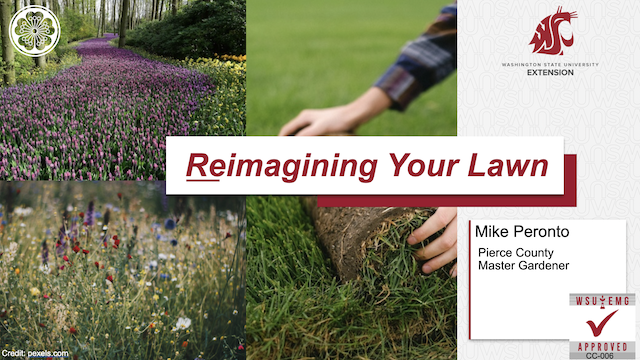
Reimagining Your Lawn

The Resilient Yard
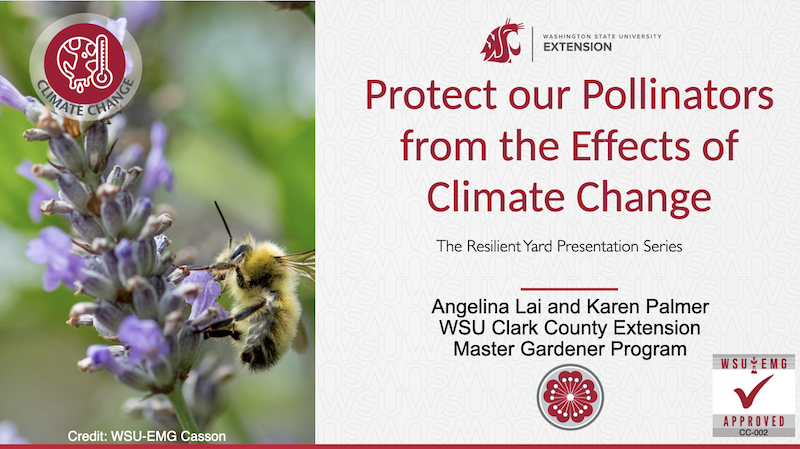
Protect our Pollinators
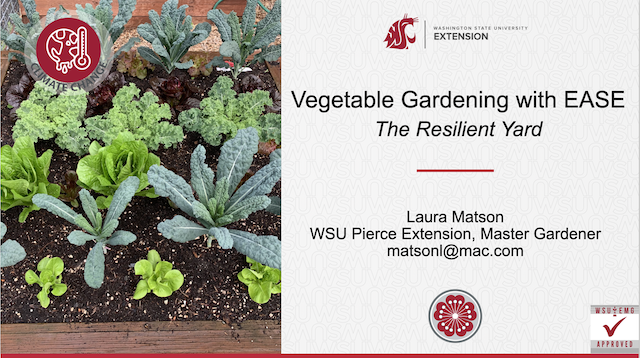
Vegetable Gardening with EASE
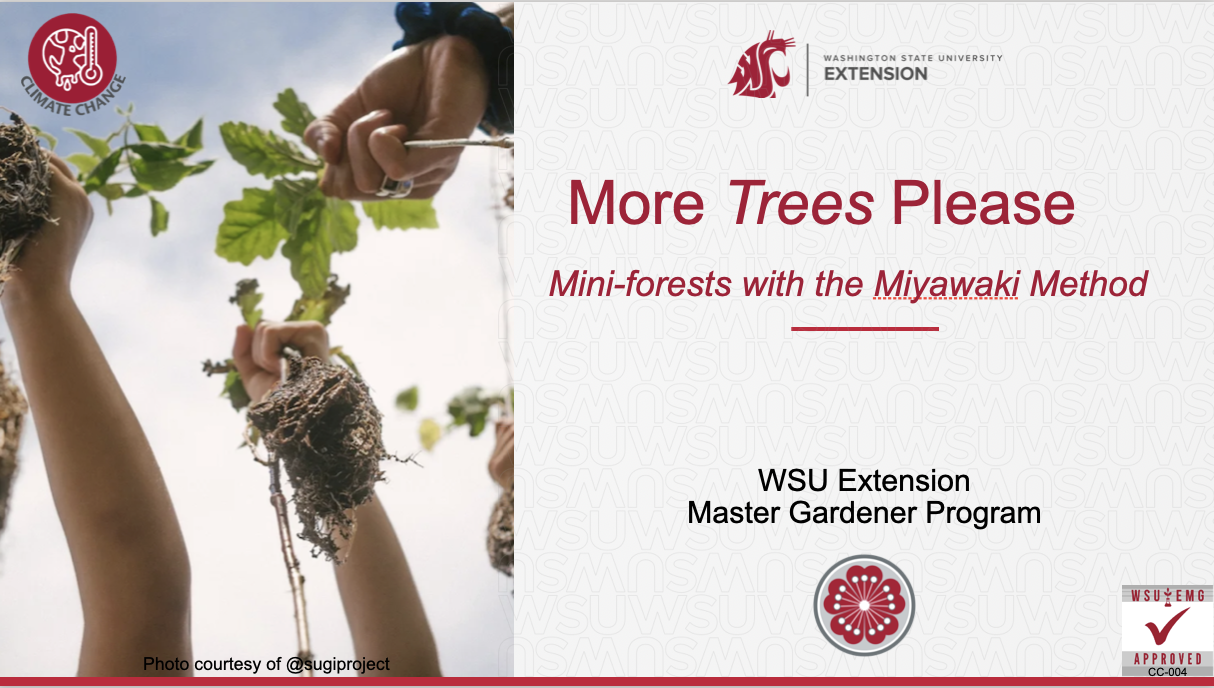
More Trees, Please!
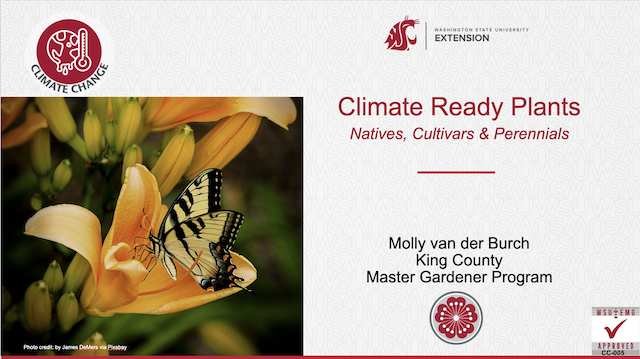
Climate Ready Plants
Spreading the word:
Reimagining Your Lawn
More Trees Please
The Resilient Yard, Battling Climate Change at Home
Become a ‘Badged’ Presenter

With a growing catalog of Badged, climate related presentations, we now need to grow presenters for these presentations. We need presenters in every county in the State. If you are interested in becoming a presenter, we are interested in helping you get there:
– For those with experience presenting. All Badged presentations come equipped with Presenters Notes. You simply pick your topic and download the presentation from the Climate Change Library, get comfortable with the content and notify your Speakers Bureau of the topic you are ready to present.
– For those in need of a little more background. Where available, in the library, we have included a video of the presentations being delivered so you can watch and learn. Further, all Badged Authors are willing to be your mentor and answer your questions. You can reach them through the Contact form (below).
If you want to become a presenter of any of the ‘Badged’ presentations, please first get approval from the person in charge of presentations in your county, either your Speakers Bureau Lead or your County Coordinator.
Additional potential projects
Project Leads Needed. Below is a carousel of project ideas that have been floated by CATs volunteers. CATs is fully staffed by Master Gardener volunteers. There is no ‘adult supervision’, it is just us. So, if any project is to take flight, it needs to have someone willing to lead it.
If you would like to take the lead on any of the ideas listed below, or if you have an idea of your own and you are seeking other CATs to join you in getting it launched, send us a note and we’ll start you down the path.
Plant Sale Merchandising
Ask-a-MG Information Packets
Newsletter Content
Youth Gardening

Throughout this site there are links to documents of various file types. Please contact our Statewide Program Leader if you require this information in a different format.